Trying to decide between a Kailua-Kona town condo and a Kohala Coast resort condo? You’re not alone. Both offer sunshine, ocean access, and strong lifestyle appeal, yet they live very differently and perform differently if you plan to rent. In this guide, you’ll see the real tradeoffs on price, HOA dues, rental rules, taxes, and financing so you can choose with confidence. Let’s dive in.
Kona vs. resort condos at a glance
Quick take: Kona town favors walkability and lower entry price. Kohala Coast resorts deliver full-service amenities with higher upfront and ongoing costs.
Lifestyle and location
- Kailua-Kona town puts you close to shops, casual dining, and everyday services. Many buildings are along Alii Drive, and you can be at the airport in roughly 20 minutes, which simplifies owner trips and guest transfers. You can verify the typical KOA to Kailua-Kona drive time using a simple route check like the one on Travelmath’s KOA to Kailua-Kona page.
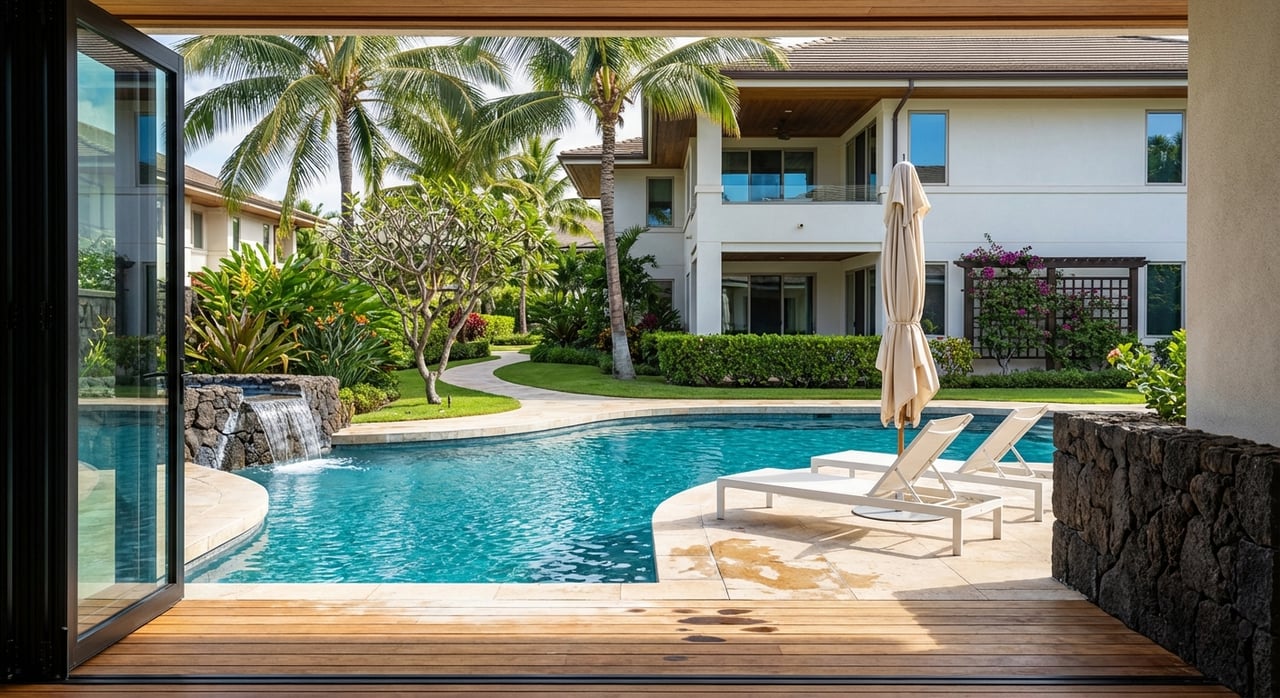
- Kohala Coast resort areas such as Waikoloa, Mauna Lani, and Mauna Kea are master-planned communities designed for leisure. Expect multiple pools, fitness, dining, golf, beach clubs, and on-site services that keep most needs within the resort.
Price and HOA reality
- Kailua-Kona entry points are often lower. Representative 1-bed units commonly list in the low to mid $400Ks, with larger oceanfront or townhome-style units reaching about $800K to $1.2M depending on size and renovation. Typical HOAs often range around the $700 to $900 per month mark.
- Kohala Coast resort condos frequently start near $800K for modest 2-beds and run to $1M to $2M-plus for larger view or beachfront units. Resort HOAs are usually higher, often $1,000 per month or more, because they fund amenities, on-site staffing, and certain utilities.
Rental demand patterns
- Kona town short-term rentals can attract travelers who want to be near town, often producing mid-range and steadier demand across the year. Current market snapshots show medians around $53K annual revenue, roughly 58 percent occupancy, and a median ADR near $474, according to Kailua-Kona STR medians from AirDNA.
- Kohala Coast resort nodes tend to achieve higher nightly rates, with some seasonality tied to resort travel patterns. Industry market summaries for Waikoloa show median annual revenue near the $70K range, with ADR and occupancy varying by unit class and seasonality, per AirROI’s Waikoloa market snapshot.
Taxes and rules that change the math
Hawaii ownership economics are shaped by state and county taxes plus county rental rules. These can materially affect net income.
TAT, Green Fee, and GET
- The state Transient Accommodations Tax was changed by Act 96, sometimes called the Green Fee. It increases the state TAT portion beginning in 2026, with more funding dedicated to environmental programs. See the state’s summary of Act 96 in the Governor’s newsroom update.
- Counties also levy a county TAT. Hawaii County explains collection and remittance on its Transient Accommodations Tax page.
- Owners also remit General Excise Tax on rental revenue. When you underwrite a property, model state TAT plus county TAT plus GET to understand true net.
County STR registration and HOA rules
- Hawaii County adopted a new framework for Transient Vacation Rentals and Transient Accommodation Rentals, shifting to registration and heightened platform enforcement. Read a practical overview of the changes in this local summary of Bill 47 / Ordinance 25-50.
- You can track official updates and resources through the county’s TAR information portal. Because rollout steps can change, always verify a unit’s current legal status and registration before you rely on projected income.
- Even where zoning allows STR use, condo documents can restrict short stays, set minimum nights, or require use of a specific rental program. Always confirm the HOA’s rental policy before you write an offer.
Property tax classification
Hawaii County taxes property based on use, and hotel/resort or investor classes typically carry higher rates than homeowner-occupied. Review the county’s rate table to understand classification impacts on your hold costs using this property tax rate reference.
Costs beyond the mortgage
HOA dues and management fees
- Town condos often carry mid-level HOAs that cover common grounds and pool maintenance. Resort condos carry higher HOAs that fund extensive amenities and services.
- If you hire a professional nightly rental manager, budget 20 to 30 percent of gross revenue for management, booking, cleanings, and turnovers. That range is standard across resort markets and should be reflected in your pro forma.
Insurance and reserves
Coastal properties can face higher premiums and deductibles for wind and hurricane coverage, plus flood considerations in certain zones. Ask for the HOA’s master policy details and set reserves for deductibles and capital improvements.
Financing and condotel issues
Some projects function like hotels with front desks and short-stay operations. These “condotels” are often non-warrantable for agency loans and may require portfolio financing with higher down payments. Get clarity early and read a plain-English overview of condo financing differences in this Guild Mortgage guide.
Which condo fits your goals
Use these rules of thumb to narrow your search. Then evaluate exact buildings and units against the checklist below.
- If you want easy evenings on foot and quick errands: Kona town usually fits best. You get walkability, faster airport access, and often lower HOAs. Confirm any rental plans against the building’s rules.
- If you want resort living with on-site pools, fitness, dining, golf, and beaches: Kohala Coast resorts are the fit. Plan for higher HOAs, more detailed rules, and a higher purchase price.
- If you want the highest potential nightly rates with outsourced management: Resort nodes tend to win on ADR, with the caveat of higher acquisition and operating costs.
- If you value steadier cash flow and simpler financing: A warrantable Kona town condo may be easier to finance with conventional loans and can support steady long-term or mid-term rental demand.
Your due-diligence checklist
Work through these items before you write an offer, especially if you plan to rent when you are not using the property.
- Verify the unit’s zoning and short-term rental status. Confirm whether it is registered or eligible under Hawaii County’s program via the county TAR resources.
- Confirm the HOA’s rental policy. Ask for CC&Rs, minimum-stay rules, any rental-pool requirements, plus the latest budget, reserve study, and any special assessments.
- Model taxes correctly. Include state TAT with Act 96 changes, county TAT, and GET. The Governor’s newsroom page on Act 96 and Hawaii County’s TAT guidance are good references.
- Pull 12 months of rental performance for the exact unit or closest comparables. Use conservative assumptions and include management, HOA, utilities, insurance, and reserves. For broad context on Kona and Waikoloa medians, see AirDNA’s Kona overview and AirROI’s Waikoloa snapshot.
- Confirm financing options. Ask whether the project is warrantable. If not, line up a portfolio lender and appropriate down payment. This condo financing explainer outlines key differences.
- Obtain insurance quotes. Verify what the HOA master policy covers and your unit’s deductibles. Set reserves for hurricane, wind, and any flood-related needs.
- Check logistics for frequent use. KOA proximity helps with owner trips and guest arrivals. You can confirm typical times with a quick reference like this KOA to Kailua-Kona drive time.
The bottom line
If you value walkability, everyday convenience, and a lower entry price, a Kailua-Kona town condo is a strong match. If you want a turnkey resort lifestyle with on-site amenities and higher ADR potential, a Kohala Coast resort condo delivers that experience with higher HOAs and more complex rules. Either way, the best decision starts with clean due diligence on taxes, STR eligibility, HOA rules, true operating costs, and financing.
If you want a side-by-side shortlist, vetted rental pro formas, or off-market options, connect with Chelsey Tanoai for a concierge plan tailored to how you plan to live and invest in West Hawaii.
FAQs
What is the core difference between Kailua-Kona town condos and Kohala Coast resort condos?
- Kona town emphasizes walkability and lower entry prices with lighter amenities, while Kohala Coast resorts focus on full-service living with higher HOAs and resort-level features like pools, fitness, dining, and golf.
How do Hawaii County’s short-term rental rules affect buying a condo for nightly rentals?
- The county now uses a registration framework with stronger platform enforcement, so you must confirm the unit’s eligibility and registration status and comply with any HOA restrictions before underwriting rental income, using resources like the county TAR portal and this local ordinance summary.
Which taxes apply to vacation rentals on the Big Island?
- Guests pay state and county TAT that you must collect and remit, and you also remit GET on gross rental revenue; Act 96 increases the state TAT component starting in 2026 per the Governor’s update and the county outlines TAT processes here.
Are resort condos harder to finance than town condos?
- Many resort projects operate as condotels, which are often non-warrantable and require portfolio loans with higher down payments, while some Kona town condos may qualify for conventional loans; read this financing overview and verify the specific project early.
What HOA dues should I expect for Kona and Waikoloa condos?
- Kona town HOAs often land in the mid-hundreds per month for modest amenity packages, while Waikoloa and other resort-area HOAs commonly run $1,000-plus per month to fund resort-scale amenities and on-site services.